A commentary on current practices in design and development of products and services and on potential social networks have to change this process.
A few years back, Ducati, a motorcycle manufacturer from Italy, launched the second generation of their all-round motorbike, called Multistrada. The motorcycle offered some interesting features, but came with quite a high price tag. While most potential buyers were turned off by the high price, in online discussions many stated they actually disliked the bike's design. In particular, the design of the front-end was unusual and debated. This motivated a random biker to redesign the front-end of the bike which made it better looking in the eyes of many.
Ducati designers probably had their reasons for designing the bike the way they did, such as aerodynamics, more efficient air intake etc., but I couldn't stop wondering whether they would have sold more bikes if the front-end of the bike had been more attractive, such as suggested by the biker who redesigned it.
Obviously, I am using the Ducati story as an example to make the argument that products and services might not be designed in an optimal way. The following is my understanding of how, for instance, cars are designed. First, the design team is given a task to draw down ideas that are most likely to fit the product, represent the company's values etc. Several designs are chosen and pushed through development. At a certain stage, full size car mock-ups are built based on the chosen designs and the decision which of the designs is going to get produced is made by the board of directors and the chief designer. Perhaps in some cases the decisions are made based on computer models and only a single mock-up is built, perhaps this process runs a little different for different manufacturers, but ultimately they all have one thing in common – the decision about how the future product should look like is made by a relatively small group of people.
Of course, car manufacturers sometimes build prototypes and look for early consumer feedback at car shows, but typically end products differ significantly from those show cars.
The question I've been asking myself is the following: Would it be possible to involve the consumer in the design and development process more directly? Could it be that decisions how products should look will one day be made by the future users of these products?
Implementation
How could this be done? For example, through online multi-medial poles that would offer choices consumers could select from and provide feedback on. The designers would still do the initial work, but the consumer would participate in the decision making and, in doing that, get involved with the product much earlier than if the final product is already built, and the only choice the consumer then has is whether to buy it or not.
The problem is that whoever would try to execute this concept, would have to align consumers and the manufacturers or service providers, which would have to adopt a new method to their work. I am not sure if an internet start-up would be able to pull this off. But giants like Google and Facebook probably could. If their executives would approach, say Volkswagen, and ask them if they would like to build the first globally designed car, a true “people's car”, how could they say no to such an offer?
They might argue they don't want to reveal their designs to prevent them from being stolen and copied by other manufactures. But consumers would recognize originality and remember where they first saw it, so I think this wouldn't be a problem. In fact, consumers would probably monitor the development of the product and eagerly await its release, especially if it ends up being designed as they chose. They would feel they contributed and see themselves as part of the product which would help sales.
Which industries?
This concept might work in other industries as well, such as fashion, sports equipment, lifestyle etc.
If a clothing manufacturer designs a number of dresses for the next season, why wouldn't potential buyers see the designs and choose the ones they like most and they are most likely to buy even before those dresses hit the stores?
As there is an increasing debate about privacy issues these days, and Google, Facebook & co. come under pressure for using data collected about their users' behaviour and selling them to advertisers, this concept could help alleviate this problem. If a user of an application that offers such multi-medial poles is made aware that his data are going to be given to manufacturers, then I can't see privacy issues with that. The benefit for consumers is that they get better products and services that match their interests. Perhaps in some cases they can even receive awards in form of products they helped develop (through a lottery-like system). On the other side, producers get really good information and direct feedback from consumers. For instance, a dress manufacturer could suddenly have precise data about how many dresses in which colour to send to which market.
The future will show whether concepts such as this one can penetrate some industries and become standard in design and development of products and services. However, in the battle of technology giants that provide marketing services to corporations, exploring such concepts might not be something they should ignore.
This article is featured at Science Simplified as it discusses technology and its impact on society. All users are welcome to share their thoughts and write commentaries about similar issues.
Migrated article. Originally published on Mar 03, 2015.
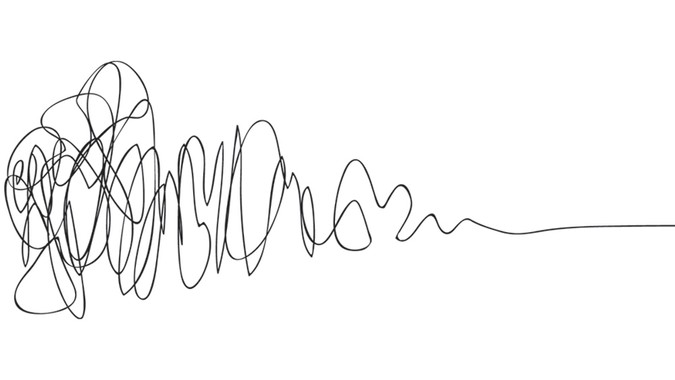
Cover image: Squiggle illustrating the design process (by Damien Newman)
Stats
- Recommendations n/a n/a positive of 0 vote(s)
- Views 81
- Comments 0